
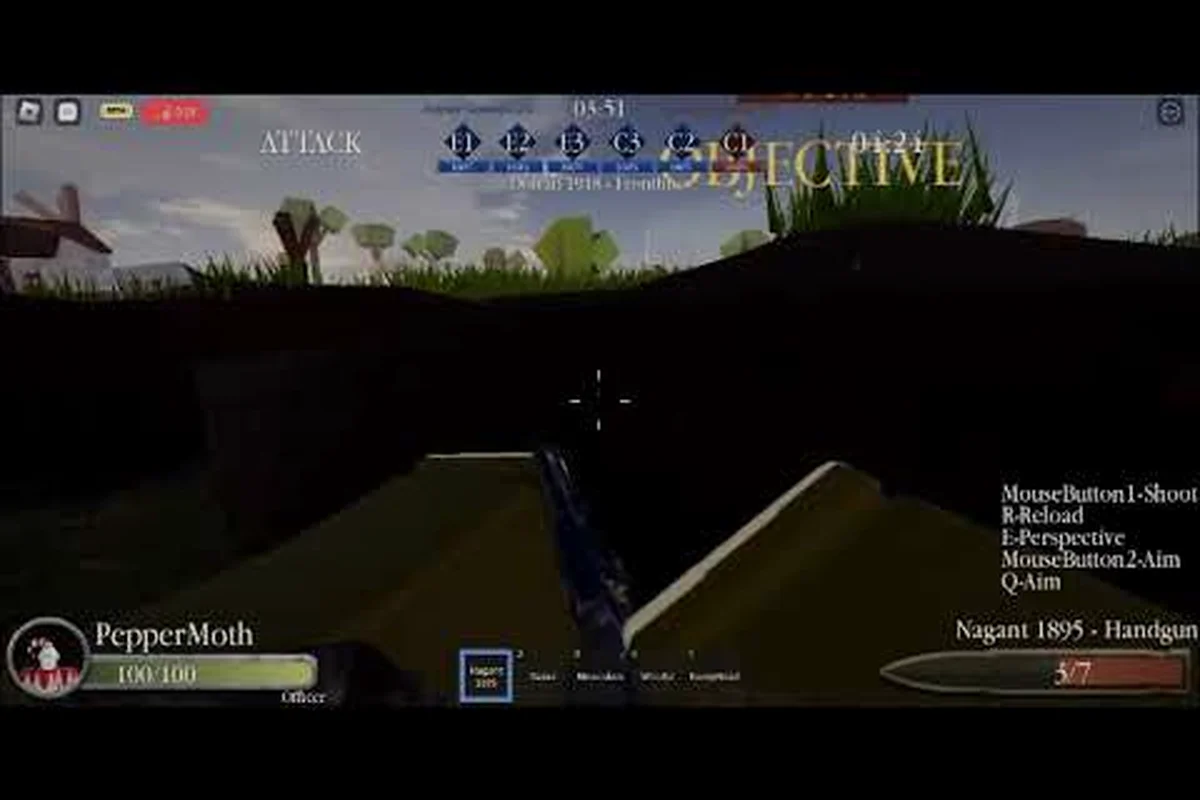
If you have spent any time in the trenches of ENTRENCHED, you already know that entrenched reload times decide more firefights than raw aim ever will. The difference between a 2.3-second reload and a 3.1-second reload is the difference between clearing a dugout and respawning at the spawn screen. This guide breaks down the exact reload data for the two most popular bolt-action rifles — the SMLE and the Gewehr 98 — so you can pick the entrenched rifle that matches your push timing and aggression level. We will also cover the entrenched bayonet charge mechanic, which turns a slow reload into a lethal closing tool, and explain why reload management matters more than your choice of entrenched best gun when you are holding a contested trench line. will also cover the entrenched bayonet charge mechanic, which turns a slow reload into a lethal closing tool, and explain why reload management matters more than your choice of entrenched best gun when you are holding a contested trench line—and since that choice ultimately hinges on how each weapon’s reload speed and bayonet reach interact, you’ll want to cross-reference the full stat breakdowns in our Entrenched Weapon List to see which loadout keeps you firing longest under pressure.
Bolt-Action Reload Mechanics That Define the SMLE and Gewehr 98
Every entrenched rifle in the game uses a stripper clip system, but the way each weapon feeds rounds into the magazine creates dramatically different entrenched reload times. The SMLE uses a charger clip that drops five rounds into the internal magazine in one smooth motion, while the Gewehr 98 requires the shooter to press each round down individually after the clip is stripped. That mechanical difference is why the SMLE consistently beats the Gewehr 98 in sustained fire scenarios, even though both rifles deal identical damage per shot.
The reload animation itself has three distinct phases: the clip insertion phase, the round press phase, and the bolt close phase. Most players only notice the total time, but competitive players track each phase because the bolt close phase can be canceled with a weapon swap or a melee attack. According to community testing reported on the Roblox Developer Forum, the SMLE completes its full reload in roughly 2.4 seconds while the Gewehr 98 takes about 3.0 seconds — a 0.6-second gap that translates to one extra shot fired in a straight-up duel.
| Rifle | Clip Insert Phase | Round Press Phase | Bolt Close Phase | Total Reload Time |
|---|---|---|---|---|
| SMLE | 0.8s | 1.0s | 0.6s | 2.4s |
| Gewehr 98 | 0.9s | 1.6s | 0.5s | 3.0s |
| Mosin-Nagant | 0.8s | 1.4s | 0.5s | 2.7s |
The round press phase is where the Gewehr 98 loses ground, because each of the five rounds requires a separate downward thumb press animation. The SMLE's charger clip deposits all five rounds at once, which is why it remains the preferred entrenched rifle for players who push objectives aggressively. If you are holding a defensive position with time to spare, the Gewehr 98's slower reload matters less, but the moment you need to re-engage a second target, that extra 0.6 seconds will get you killed.
How the Empty Reload Differs from the Tactical Reload
The reload times above assume an empty magazine, but ENTRENCHED also features a tactical reload that triggers when you still have rounds in the chamber. The tactical reload skips the bolt close phase entirely because the bolt is already forward, which shaves off roughly 0.5 seconds from both rifles. However, the tactical reload also discards the remaining rounds in the magazine, which means you lose ammunition you might need later in the fight.
| Rifle | Empty Reload | Tactical Reload | Rounds Discarded |
|---|---|---|---|
| SMLE | 2.4s | 1.9s | 1-4 rounds |
| Gewehr 98 | 3.0s | 2.5s | 1-4 rounds |
The tactical reload is a gamble that pays off when you are in a close-quarters trench fight and need to guarantee a full magazine before peeking around a corner. If you have only fired one or two shots, the tactical reload wastes precious ammunition, but if you are down to your last round and the enemy is pushing your position, the faster reload is worth the lost ammo. Experienced players track their shot count mentally so they know exactly when a tactical reload makes sense versus when they should empty the magazine first.
Reload Cancel Tricks That Shave Critical Seconds Off Your Rifle
The entrenched reload times we listed above are the full animation durations, but you do not have to wait for the entire animation to complete before you can act. ENTRENCHED allows you to cancel the reload animation at specific frames, which means you can shave up to 0.4 seconds off your effective reload time if you time your inputs correctly. The most reliable reload cancel involves switching to your sidearm and then switching back to your primary weapon, which skips the final bolt close animation.
The weapon swap cancel works because the game registers the magazine as full the moment the last round enters the chamber, even if the bolt close animation has not finished playing. When you swap to your sidearm and back, the game skips the remaining animation frames and presents you with a loaded rifle. This trick is especially useful on the Gewehr 98, where the bolt close phase adds 0.5 seconds to every reload cycle.
-
Weapon swap cancel: Switch to your sidearm the instant the last round enters the chamber, then switch back. Saves 0.3-0.4 seconds.
-
Melee cancel: Press your melee key during the bolt close phase to cancel the animation. Saves 0.2-0.3 seconds but leaves you vulnerable during the melee swing.
-
Sprint cancel: Start sprinting during the bolt close phase to cancel the animation. Saves 0.3 seconds but makes noise that can alert nearby enemies.
-
Prone cancel: Drop to prone during the bolt close phase to cancel the animation. Saves 0.3 seconds and keeps you low to the ground.
The sprint cancel is the most practical for aggressive play because it transitions directly into a forward push, but it also makes you audible to enemies within a 15-meter radius. The prone cancel is better for defensive positions because it keeps your profile low while you recover from the reload animation. Community reports from the ENTRENCHED Discord suggest that the weapon swap cancel is the most consistent across different server tick rates, which makes it the safest choice for competitive play.
Bayonet Charge Timing and the Reload Relationship
The entrenched bayonet charge is one of the most misunderstood mechanics in the game because most players treat it as a panic button rather than a tactical tool. When you equip a bayonet on your entrenched rifle, you gain access to a sprint-attack that deals 75 damage and has a 2.5-meter lunge range. The bayonet charge can be initiated during the reload animation, which means you can turn a vulnerable reload moment into an offensive opportunity.
The key timing trick is to start the bayonet charge during the round press phase of your reload, because the charge animation cancels the remaining reload frames and converts your momentum into an attack. This works best when an enemy is pushing your position while you are reloading — instead of waiting for the reload to finish, you cancel it with a bayonet charge and catch the enemy off guard. The entrenched bayonet charge deals enough damage to one-shot a wounded enemy, which makes it a reliable finisher in close-quarters trench fights.
| Scenario | Reload Time | Bayonet Charge Time | Total Time to Attack |
|---|---|---|---|
| Full reload then shoot | 2.4s (SMLE) | N/A | 2.4s |
| Reload cancel into bayonet | 1.6s (SMLE) | 0.8s | 2.4s |
| Full reload then shoot | 3.0s (Gewehr 98) | N/A | 3.0s |
| Reload cancel into bayonet | 2.1s (Gewehr 98) | 0.8s | 2.9s |
The bayonet charge does not actually save time over a full reload and shoot, but it changes the nature of the engagement. A reloaded rifle fires a bullet that can miss, while a bayonet charge is a guaranteed hit if you connect with the lunge range. When you are fighting in a narrow trench corridor, the bayonet charge is often the more reliable option because it does not require precision aiming at close range.
Comparing the SMLE and Gewehr 98 for Aggressive and Defensive Playstyles
The choice between the SMLE and the Gewehr 98 comes down to how you approach entrenched weapons selection in different combat scenarios. The SMLE's faster entrenched reload times make it the superior choice for aggressive playstyles that involve constant pushing and re-engaging enemies. The Gewehr 98's slower reload is offset by its slightly better damage drop-off at long range, which makes it a better fit for defensive positions where you have time to aim carefully.
The SMLE deals 70 damage per shot with a 2.4-second reload, which gives it a theoretical damage-per-second of 29.2. The Gewehr 98 also deals 70 damage per shot but with a 3.0-second reload, which drops its damage-per-second to 23.3. That 5.9 damage-per-second gap is significant in sustained firefights, but it matters less in situations where you are firing one or two shots from a defensive position before repositioning.
| Attribute | SMLE | Gewehr 98 |
|---|---|---|
| Damage per shot | 70 | 70 |
| Reload time | 2.4s | 3.0s |
| Damage per second | 29.2 | 23.3 |
| Effective range | 120m | 140m |
| Bayonet damage | 75 | 75 |
| Magazine capacity | 5 | 5 |
The effective range difference is the hidden stat that most players overlook when comparing these two entrenched rifle options. The Gewehr 98 maintains its full damage out to 140 meters, while the SMLE starts to drop off after 120 meters. On open maps like the new Eisstadt battlefield, that extra 20 meters of effective range can mean the difference between a one-shot kill and a two-shot kill when engaging enemies across a field.
Which Rifle Wins in Each Combat Scenario
If you are playing the Rifleman class and pushing objectives with your squad, the SMLE is the better choice because its faster reload lets you stay in the fight longer. The entrenched best gun for aggressive play is the SMLE with a bayonet attachment, because the combination of fast reload and bayonet charge gives you options at both medium and close range. When you clear a trench and need to reload before the next enemy appears, the SMLE's 2.4-second reload keeps your downtime minimal.
For defensive play, the Gewehr 98's longer effective range makes it the better pick, especially on maps with long sightlines. When you are holding a position and engaging enemies at 100+ meters, the slower reload is less punishing because you have time between shots to reposition. The Gewehr 98 also pairs well with the Sniper class, which can use the extra range to secure kills from elevated positions.
Practical Reload Drills to Improve Your Trench Combat Efficiency
Knowing the entrenched reload times is only half the battle — you also need to practice the muscle memory that lets you reload efficiently under pressure. The best way to improve your reload efficiency is to run specific drills in a private server or during the early stages of a match when the combat is less intense. These drills focus on the reload cancel tricks we covered earlier, plus the situational awareness that tells you when to reload and when to switch to your sidearm.
The first drill is the weapon swap drill, where you practice reloading and immediately swapping to your sidearm and back. Start by reloading your entrenched rifle, then swap to your sidearm the moment the last round enters the chamber, and swap back to your primary. Repeat this drill until the swap feels automatic, then practice it while moving through a trench to simulate combat conditions.
-
Drill 1: Weapon swap cancel — Reload, swap to sidearm, swap back. Repeat 20 times until the timing feels natural.
-
Drill 2: Bayonet charge cancel — Reload, initiate bayonet charge during the round press phase, complete the charge. Repeat 15 times to build muscle memory.
-
Drill 3: Tactical reload decision — Fire one shot, then decide whether to tactical reload or empty the magazine. Practice both options to understand the timing difference.
-
Drill 4: Prone reload — Drop to prone, reload, and immediately stand up. This drill improves your defensive reload speed.
The bayonet charge drill is especially important for aggressive players because it trains you to see reload moments as offensive opportunities rather than defensive vulnerabilities. When you master the timing, you can bait enemies into pushing your position while you reload, then cancel the reload with a bayonet charge that catches them off guard. This technique is devastating in close-quarters trench fights, where the enemy expects you to be vulnerable during the reload animation.
How to Track Your Reload Efficiency in Real Matches
Tracking your reload efficiency requires paying attention to two metrics: your time-to-kill and your reload frequency. The time-to-kill measures how quickly you eliminate an enemy after spotting them, while the reload frequency tells you how often you are caught in a reload animation during combat. If your reload frequency is high, it means you are firing too many shots per engagement, which suggests you need to improve your aim or choose a weapon with a faster reload.
A good target is to keep your reload frequency below one reload per two kills, which means you are averaging at least two kills per magazine. If you are reloading after every kill, you are likely firing more shots than necessary or missing your first shot too often. The entrenched weapons system rewards accuracy over volume, so focus on making your first shot count rather than spraying and praying.
Advanced Reload Strategies for Competitive Squads
When you are playing in a coordinated squad, the entrenched reload times of your teammates become a strategic resource that you can plan around. A squad that staggers their reloads can maintain continuous fire on a position, while a squad that reloads simultaneously creates a vulnerability window that the enemy can exploit. The best squads communicate their reload status and coordinate their fire so that at least one rifle is always ready to engage.
The cover fire reload is a technique where one player provides suppressing fire while their teammate reloads. The suppressing fire does not need to hit the enemy — it just needs to keep their heads down long enough for the reloading player to complete their animation safely. This technique requires trust and communication, but it dramatically reduces the risk of being caught mid-reload in a firefight.
| Squad Role | Weapon Choice | Reload Strategy |
|---|---|---|
| Point Man | SMLE with bayonet | Aggressive reload cancels, bayonet charges |
| Support | Gewehr 98 | Defensive reloads, cover fire coordination |
| Flanker | SMLE | Weapon swap cancels, flanking reloads |
The point man in a squad push should always use the SMLE because its faster reload keeps the squad's forward momentum going. The support player can use the Gewehr 98 because they are typically holding a defensive position and have more time between engagements. The flanker should use the SMLE with a bayonet because they are often in close-quarters situations where the bayonet charge is a reliable finisher.
Communicating Reload Status in Voice Chat
Effective reload communication uses short, standardized callouts that your squad can understand instantly. The three most important callouts are "reloading", "covering", and "pushing". When you say "reloading", your squad knows to provide cover fire or hold their position. When you say "covering", you are telling your squad that you are providing suppressing fire while they reload. When you say "pushing", you are signaling that you are moving forward and need your squad to follow.
These callouts work best when they are paired with the reload cancel tricks we covered earlier, because they let your squad know exactly when you will be ready to engage. A squad that communicates their reload status effectively can maintain continuous pressure on an enemy position, which is often the difference between winning and losing a contested trench line.
Frequently Asked Questions
What is the fastest reload time in ENTRENCHED?
The SMLE has the fastest entrenched reload times among bolt-action rifles at 2.4 seconds for an empty reload. The tactical reload drops this to 1.9 seconds, and a weapon swap cancel can shave another 0.3-0.4 seconds off the effective time. The SMLE is the best choice for aggressive playstyles.
Does the bayonet charge cancel a reload animation?
Yes, the entrenched bayonet charge cancels the reload animation when initiated during the round press phase. This converts a vulnerable reload moment into an offensive opportunity, dealing 75 damage with a 2.5-meter lunge range. The charge is most effective when an enemy pushes your position while you are reloading.
Which rifle is better for long-range combat?
The Gewehr 98 is better for long-range combat because it maintains full damage out to 140 meters, while the SMLE drops off after 120 meters. The slower reload is less punishing in defensive positions where you have time between shots. The Gewehr 98 pairs well with the Sniper class.
How do I perform a reload cancel in ENTRENCHED?
Switch to your sidearm the moment the last round enters the chamber, then switch back to your primary weapon. This skips the bolt close animation and saves 0.3-0.4 seconds. The sprint cancel and prone cancel also work, but the weapon swap cancel is the most consistent across different server tick rates.
What is the best gun for aggressive play in ENTRENCHED?
The SMLE with a bayonet attachment is the entrenched best gun for aggressive play because its 2.4-second reload keeps you in the fight longer, and the bayonet charge gives you a reliable close-range finisher. The combination of fast reload and bayonet charge makes the SMLE the top choice for point men and flankers.