
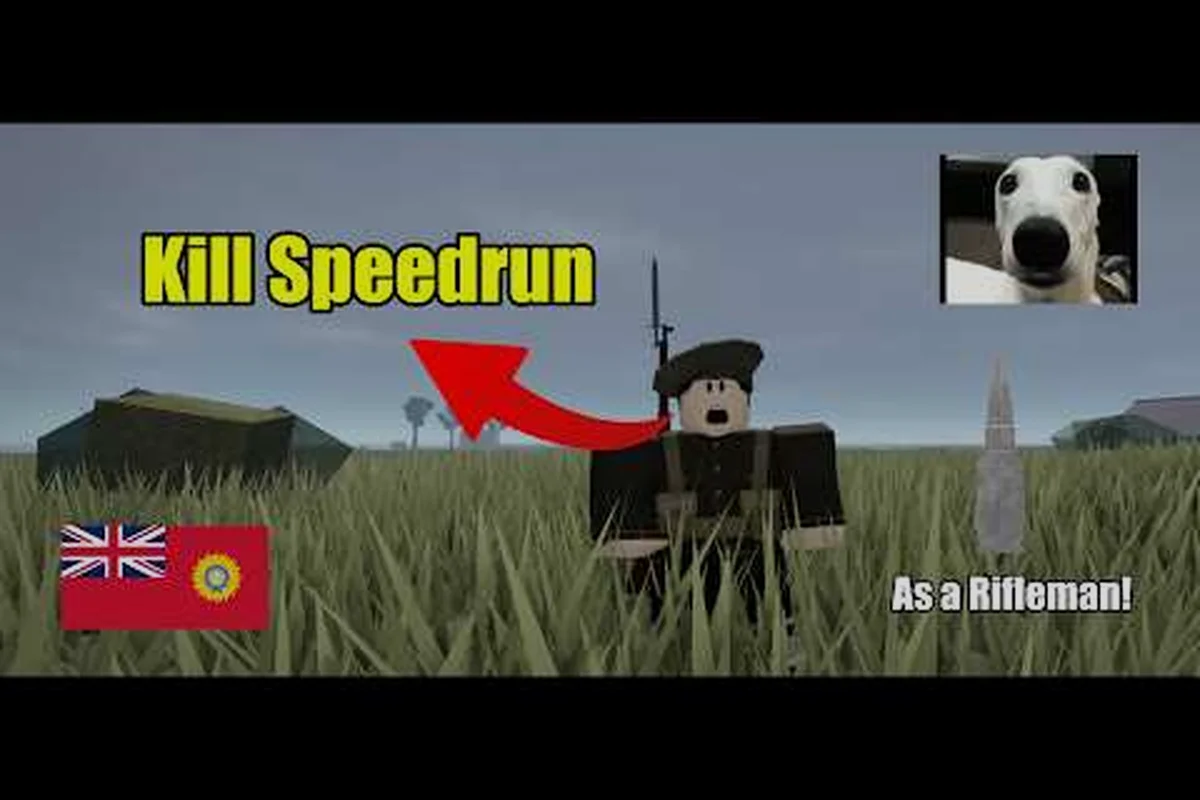
ENTRENCHED progression is more than just climbing ranks — it's the system that decides which weapons you can unlock, how quickly you earn credits, and whether your aim settings actually translate into consistent kills. Most new players ignore this framework entirely, then wonder why they're stuck with the starting rifle while teammates are running machine guns and scoped optics. Understanding how progression, sensitivity, and matchmaking interact will save you dozens of hours of wasted grinding and frustration.
The game's official Roblox page describes ENTRENCHED as a WW1-themed shooter where the Entente and Central Powers battle across the trenches, featuring nine distinct classes and turn-based Frontlines, Conquest, and Domination modes. What that description doesn't tell you is how the progression curve shapes every match you play. Your class rank gates access to better loadouts, your sensitivity determines whether you can track moving targets through muddy trenches, and the matchmaking system decides whether you're fighting evenly matched squads or getting steamrolled by veterans. Get these three pillars right, and you'll accelerate your ENTRENCHED progression dramatically.
The ENTRENCHED Progression System: Ranks, Credits, and Class Levels
ENTRENCHED progression runs on a dual-track system that separates your overall account level from your individual class ranks. The game tracks both simultaneously, and each one feeds into different unlock paths. Your account rank rises with every match you complete, regardless of performance, while class ranks only advance when you play that specific class. This distinction matters because the best weapons and gadgets in ENTRENCHED are locked behind class-specific level requirements, not your overall account level.
The credit economy sits at the center of this whole system. Every match awards credits based on your score, kills, objective captures, and revive count, and those credits are what you spend on new weapons and equipment. According to community data, a solid Frontlines match typically yields between 200 and 400 credits, while a dominant performance with multiple captures and kill streaks can push past 600. The grind becomes real when you look at weapon prices — most primary weapons cost between 1,500 and 4,000 credits, which means you're looking at roughly ten to fifteen matches per unlock if you're playing consistently.
| Progression Element | How It Increases | What It Unlocks | Grind Pace |
|---|---|---|---|
| Account Rank | Match completion + score | Cosmetics, bragging rights | Slow but steady |
| Class Rank | Playing that class | Class-specific weapons | Medium |
| Credits | Score, kills, captures, revives | All weapons and equipment | Fastest early, slows later |
| Battle Pass (if active) | Match XP | Limited-time cosmetics | Seasonal |
The smartest approach to ENTRENCHED progression is to focus on one class until you hit the rank that unlocks its best weapon, then branch out. Players who spread their time across all nine classes evenly end up with no class above rank five, which means they're locked out of every top-tier weapon in the game. The community consensus, reported across the Roblox Developer Forum discussions, is that class rank ten is the sweet spot where most classes unlock their strongest loadout options.
How Class Ranks Gate Your Loadout Options
Each of the nine classes — Rifleman, Assault, Medic, Sniper, Scout, Support, Officer, Flamethrower, and Machine Gunner — has its own progression ladder with unique unlock rewards. The Rifleman class starts with the standard bolt-action rifle, but by rank five you gain access to a higher-capacity variant, and by rank ten the scoped marksman version becomes available. The Machine Gunner follows a similar path, starting with a light machine gun and unlocking the heavier, more accurate suppression weapons at higher ranks.
What most guides don't emphasize enough is that class rank also affects your passive abilities. Medics unlock faster bandaging at rank three and a longer revive range at rank seven. Officers gain a larger command radius and shorter cooldowns on their abilities as they level. These passive upgrades are invisible on the weapon selection screen, but they dramatically change how effective you are in combat. A rank-ten Medic is fundamentally a different class than a rank-one Medic, even if both are carrying the same rifle.
Credit Farming Methods That Actually Work
Since credits are the universal currency for ENTRENCHED progression, learning to farm them efficiently is the single biggest time-saver in the game. The objective-based modes like Conquest and Domination reward consistent point capture far more generously than raw kill counts. A player who captures three objectives and dies twenty times earns more credits than a sniper who goes 15-2 but never touches a capture point.
The most efficient credit farming method, based on community testing, is playing the Medic class in Frontlines mode. The revive mechanic awards credits for every successful revive, and in a full 32-player match, a dedicated medic can easily rack up fifteen to twenty revives. Combined with the natural score from healing and occasional kills, this translates to roughly 500 credits per match without requiring exceptional aim. It's not the most glamorous way to play, but it accelerates your ENTRENCHED progression faster than any other strategy.
ENTRENCHED Sensitivity Settings: Finding Your Optimal Aim
Sensitivity is the most personal and most impactful setting in ENTRENCHED, yet it's also the one that new players tend to ignore. The default sensitivity values work for casual play, but they're rarely optimal for competitive performance. Your sensitivity determines how far your crosshair moves when you push your mouse or controller stick, and getting this wrong means you'll either over-rotate past targets or under-rotate and fail to track them entirely.
The core principle behind sensitivity tuning is that lower sensitivity improves precision at the cost of speed, while higher sensitivity does the opposite. In ENTRENCHED, where most engagements happen at medium range across open trench lines, precision matters more than speed. The game's ballistics system already requires careful aim — bullets have travel time and drop, as covered in the ENTRENCHED aiming fundamentals guide — so adding twitchy sensitivity on top of that makes consistent shots nearly impossible.
| Playstyle | Mouse Sensitivity | ADS Sensitivity | Best For |
|---|---|---|---|
| Aggressive Assault | 1.2 - 1.5 | 0.8 - 1.0 | Close-range pushes, trench clearing |
| Balanced Rifleman | 0.8 - 1.0 | 0.6 - 0.8 | Medium-range duels, versatile play |
| Precision Sniper | 0.5 - 0.7 | 0.4 - 0.6 | Long-range shots, holding sightlines |
| Support/Medic | 1.0 - 1.2 | 0.7 - 0.9 | Scanning battlefield, quick target switching |
The ADS sensitivity multiplier is arguably more important than your base sensitivity. When you aim down sights in ENTRENCHED, the game applies a multiplier to your base sensitivity, and getting this ratio right is what separates players who can track moving targets from those who can't. Most competitive players run an ADS multiplier between 0.6 and 0.8, which gives them enough precision for long-range shots while still allowing quick target acquisition when they unscope.
How to Test and Tune Your Sensitivity
Finding your ideal sensitivity doesn't require expensive equipment or special tools — it just requires a systematic approach. Start by setting your base sensitivity to 1.0 and your ADS multiplier to 0.7, then play three to five matches without changing anything. Pay attention to two specific failure points: when you're tracking a moving enemy at medium range, and when you're snapping between two targets in close quarters.
If you consistently overshoot targets — meaning your crosshair passes past them — your sensitivity is too high. Reduce it by 0.1 increments until the overshoot disappears. If you undershoot, meaning your crosshair stops short of the target, increase it. The goal is to reach a point where your crosshair lands on the target naturally without micro-corrections. Community reports suggest that most ENTRENCHED players settle between 0.7 and 1.1 base sensitivity, with the exact value depending on their mouse DPI and desk space.
Platform-Specific Sensitivity Considerations
Sensitivity tuning works differently across PC, mobile, and console, and ENTRENCHED supports all three platforms. On PC, your mouse DPI interacts with the in-game sensitivity setting, so a high-DPI mouse requires a lower in-game value. On mobile, the touch controls use a different sensitivity scale entirely, and most mobile players report that the default values are too twitchy — reducing touch sensitivity to around 60-70% of the default produces noticeably better aim. On console, the analog stick dead zone and acceleration curve add complexity, and the movement and control guide covers these platform-specific quirks in more detail.
The key insight across all platforms is that consistency beats raw speed. A sensitivity you can control reliably in every engagement will outperform a higher sensitivity that occasionally lets you snap onto a target but frequently causes you to miss. Once you find a setting that feels stable, resist the urge to tweak it after every bad match. Give it at least a week of play before making further adjustments.
ENTRENCHED Matchmaking: How the System Pairs Players
The ENTRENCHED matchmaking system determines who you fight and who fights alongside you, and understanding how it works can save you from frustration. The system uses a combination of account level, recent performance, and party size to build matches. It's not a strict skill-based matchmaking system like you'd find in ranked shooters — ENTRENCHED prioritizes filling servers quickly over perfectly balanced teams, which means you'll occasionally face squads that significantly outmatch your team.
The server browser is your best tool for controlling match quality. Instead of relying on quick play, which drops you into whatever server has space, the server browser lets you see the player count, the map in rotation, and the ping before you join. This is especially valuable for ENTRENCHED progression because a stable, low-ping server means your shots register consistently, which translates directly to better scores and faster credit earning.
| Matchmaking Factor | Impact on Experience | How to Work With It |
|---|---|---|
| Account Level | Higher levels face tougher opponents | Expect harder matches as you level |
| Recent Performance | Win streaks attract stronger enemies | Don't be discouraged by losing streaks |
| Party Size | Full squads get matched against other squads | Coordinate with friends for fairer games |
| Server Region | High ping causes hit registration issues | Always filter by your region |
The matchmaking system also handles the turn-based Frontlines mode differently from the continuous modes. In Frontlines, teams alternate between attacking and defending, and the matchmaking system tries to balance the number of players on each side. When one team has a significant player advantage, the system will hold new players in a queue until the sides even out. This is why you sometimes wait thirty seconds to a minute before spawning into a Frontlines match.
How Matchmaking Affects Your Progression Speed
Your matchmaking experience directly impacts how fast you progress, because match outcome and personal score both feed into your credit earnings. A player who consistently lands in balanced matches with competent teammates will earn more credits per hour than a player who keeps getting dropped into one-sided steamrolls. In a 10-minute match where your team is getting pushed back the entire time, you'll be lucky to earn 150 credits. In a close, competitive match that goes the full duration, you can easily earn 400 or more.
The practical takeaway is that server selection is a progression strategy, not just a preference. Use the server browser to find matches with reasonable player counts — servers that are nearly full tend to have more balanced teams, while half-empty servers often indicate a match in progress where one side is already dominating. The matchmaking modes overview breaks down how each game mode's rules affect the matchmaking experience.
Party Play and Its Effect on Match Quality
Playing in a party changes your matchmaking experience in ways that can help or hurt your ENTRENCHED progression. The system weights parties as stronger than the sum of their individual members, which means a four-player party will be matched against opponents with higher individual ratings. This can lead to tougher matches, but it also means your teammates are coordinated, which often compensates for the difficulty increase.
The real benefit of party play is consistent teamwork, which translates to more objective captures, more revives, and ultimately more credits. A coordinated squad that communicates and plays complementary classes will earn more per match than a group of solo players with better individual aim. If you're serious about ENTRENCHED progression, finding two or three regular teammates is one of the highest-return investments you can make.
The progression system in ENTRENCHED is built around a steady curve of XP and rank unlocks, with each tier requiring incrementally more playtime to reach the next milestone, as detailed on the game’s official Roblox page.
Building an ENTRENCHED Progression Plan That Works
Now that we've covered the three pillars — progression mechanics, sensitivity, and matchmaking — it's time to put them together into a practical plan. The most effective ENTRENCHED progression strategy treats the game as a system to optimize, not just a shooter to play. Every match should have a purpose, whether that's farming credits, leveling a specific class, or testing a new sensitivity setting.
The first step is to choose your main class and stick with it. Based on the class breakdown on the official game page, the Rifleman and Assault classes are the most forgiving for new players, while Medic offers the fastest credit earning. Pick one, commit to it for at least twenty matches, and push its rank as high as you can. This single decision will shape your entire early progression.
| Progression Phase | Matches | Goal | Recommended Class |
|---|---|---|---|
| Phase 1: Foundations | 1-10 | Learn maps, test sensitivity | Rifleman |
| Phase 2: Class Leveling | 10-30 | Reach class rank 5-7 | Your chosen main |
| Phase 3: Credit Grinding | 30-60 | Save 4,000+ credits | Medic or Support |
| Phase 4: Loadout Completion | 60+ | Unlock top-tier weapons | Switch to meta classes |
During Phase 1, focus entirely on fundamentals. Use the beginner guide to learn the maps, practice your aim with the sensitivity settings you've tuned, and don't worry about your score. The goal is to build muscle memory and map awareness, not to top the leaderboard. By the end of this phase, you should have a sensitivity setting that feels natural and a basic understanding of each map's flow.
Phase 2 is where your ENTRENCHED progression accelerates. Now that you understand the game, focus on leveling your chosen class to unlock better weapons. Play that class exclusively, even if the situation calls for a different role. The temporary frustration of playing a suboptimal class is worth the long-term benefit of having its best weapons unlocked.
Advanced Progression Tactics for Experienced Players
Once you've completed the basic progression phases, you can start optimizing your play for maximum efficiency. The credit-to-time ratio becomes your primary metric — you want to earn the most credits possible per minute of play. This means prioritizing game modes that award consistent objective score, playing classes with high support potential, and avoiding matches where your team is clearly going to lose quickly.
One advanced tactic reported by veteran players is alternating between credit farming and class leveling. Spend two matches playing Medic to build your credit reserve, then one match playing your main class to advance its rank. This balanced approach ensures you always have credits available when you hit the rank threshold for a new weapon, rather than grinding for days to afford it.
Another consideration is timing your play sessions around server population. During peak hours, servers are full and matches are more competitive, which means higher scores and better credit earnings. During off-peak hours, you'll find fewer full servers and more matches in progress, which can be frustrating. If your schedule allows, play during peak hours and use off-peak time for sensitivity testing or practicing in less competitive servers.
Tracking Your Progress and Adjusting Your Plan
ENTRENCHED doesn't have a built-in progression tracker beyond the basic rank display, so keeping your own records is essential. A simple spreadsheet tracking your credits earned per match, class rank milestones, and sensitivity changes will reveal patterns you'd otherwise miss. For example, you might discover that you earn 30% more credits in Conquest than Frontlines, or that your accuracy improves significantly after a specific sensitivity adjustment.
The most important adjustment to make is recognizing when your current strategy stops working. If you've been playing the same class for fifty matches and your credit earnings have plateaued, it's time to switch things up. The ENTRENCHED progression system rewards versatility at higher levels — the players who unlock everything fastest are the ones who can effectively play multiple classes and adapt to whatever the matchmaking system throws at them.
According to the official ENTRENCHED Roblox game page, the game’s progression system is designed so that players unlock new weapons and tools through a tiered leveling mechanic, where each successive rank requires exponentially more experience points to reach the next entrenched tier.
According to the official ENTRENCHED page on Roblox, the game's progression system is designed to reward sustained play, with each tier requiring an escalating amount of experience to unlock the next set of weapons and abilities.
Common ENTRENCHED Progression Mistakes and How to Avoid Them
Every experienced ENTRENCHED player has made these mistakes, and recognizing them early will save you significant time. The most common error is spreading your playtime across too many classes. The game's class rank system heavily rewards focus, and a player who reaches rank ten in one class will have access to better loadouts than a player who's rank three in five different classes. Resist the urge to try every class in your first week — pick one and master it first.
The second most common mistake is ignoring sensitivity tuning entirely. Many players accept the default sensitivity settings without realizing how much they're handicapping themselves. The difference between a well-tuned sensitivity and the default can be the difference between winning and losing medium-range duels, which are the most common engagements in ENTRENCHED. Take the time to test and adjust your settings before committing to serious progression.
| Mistake | Why It Hurts Progression | Better Approach |
|---|---|---|
| Playing every class equally | No class reaches high ranks | Focus on one class to rank 10 |
| Ignoring sensitivity settings | Inconsistent aim = lower scores | Spend a session tuning sensitivity |
| Skipping the server browser | Random matches waste time | Always check server quality first |
| Spending credits immediately | Can't afford top-tier weapons | Save for specific unlock goals |
| Playing only one game mode | Misses mode-specific bonuses | Rotate modes for variety and credits |
The third mistake is poor credit management. New players tend to spend credits as soon as they earn them, buying whatever weapon looks interesting. This leaves them broke when they finally reach the class rank that unlocks a genuinely powerful weapon. A better approach is to research the unlock tree for your main class, identify the top-tier weapons, and save your credits specifically for those unlocks.
Why Some Players Progress Faster Than Others
The difference between fast and slow progression in ENTRENCHED often comes down to deliberate practice versus passive play. Players who progress quickly don't just play more matches — they play with specific goals in mind. They're testing their aim, analyzing their deaths, and adjusting their approach based on what they learn. Passive players, by contrast, play the same way every match and wonder why their results don't improve.
Another factor is understanding the game's economy. Players who know which game modes pay out the most credits, which classes earn the most score, and when to save versus spend will always outpace players who ignore these systems. ENTRENCHED progression is as much about resource management as it is about shooting skill, and treating it that way will accelerate your growth substantially.
Frequently Asked Questions
How long does it take to reach max rank in ENTRENCHED?
Reaching max rank in ENTRENCHED typically takes 150 to 200 hours of playtime, based on community reports. This assumes consistent play with a focus on objective scoring and efficient credit earning. Players who optimize their progression strategy can shorten this to around 120 hours, while casual players may take 300 or more.
What is the best sensitivity setting for ENTRENCHED?
There's no single best sensitivity, but most competitive players use a base sensitivity between 0.7 and 1.1 with an ADS multiplier of 0.6 to 0.8. Start at 1.0 base and 0.7 ADS, then adjust based on whether you're overshooting or undershooting targets. Your optimal value depends on your mouse DPI and personal preference.
Does matchmaking affect how fast I level up?
Yes, matchmaking quality directly impacts your progression speed. Balanced matches that go the full duration award significantly more credits than one-sided steamrolls. Using the server browser to find well-populated, balanced servers will increase your credits per hour and accelerate your overall ENTRENCHED progression.
Should I focus on one class or play multiple classes?
Focus on one class until you reach at least rank ten, which unlocks most of that class's best weapons. After that, branch out to a second class. This focused approach ensures you always have a competitive loadout available while you're leveling other classes.
What is the fastest way to earn credits in ENTRENCHED?
Playing the Medic class in Frontlines mode is the fastest credit-earning method, according to community testing. The revive mechanic awards credits for every successful revive, and a full match can yield fifteen to twenty revives. Combined with objective captures and healing score, this translates to roughly 500 credits per match.